

|
Wildcats/Specials
"Specials" are just that -
special and each must be approached as a unique tool to cut a chamber
for a cartridge designed to fulfill a specific purpose. A wildcat
cartridge intended for use hunting dangerous game will require a
chamber with considerably more clearance than will a cartridge intended
for bench rest accuracy. Because of this, there are no "standard
clearances" for special chambering reamers. When we work with you to
create a chambering reamer for your own wildcat, there are several
things that must be kept in mind.
Intended Use of the Wildcat
Will you be hunting dangerous game with your .577
Loudenboomer? If so, there should be more clearance between chamber and
cartridge to facilitate rapid reloading and to keep any dirt that might
find its way into the gun from causing the cartridge to bind. You may
wish to use bullets of variable weights and lengths on different game.
For this reason, you would want the reamer to cut a throat compatible
with the longest/heaviest bullet being used.
Benchresters will often stick with one specific bullet,
seated very carefully to an exact depth. It will shoot in a single-shot
mode where speed is least important. A special reamer in this case
would be made to cut a chamber much closer in size to that of the
cartridge.
Brass Preparation and Care of Same
The manner in which brass will be prepared and
maintained will determine appropriate clearances between chamber and
cartridge. Safety is paramount in wildcatting (as in all shooting) and
conditions which cause operating pressures to reach dangerous levels
must be avoided. Chamber neck sections that pinch the neck of the
cartridge by being too short and/or too tight, extremely short throats
and excessive headspace can all create high chamber pressures.
Unless you are planning to ream/turn case necks, we
would not recommend the neck section of your chamber be made less than
.004" larger than actual cartridge diameter. We have made reamers that
cut chambers tighter than this, but in all cases, the shooter was going
to keep very close track of his brass. Should you decide on a "tight"
chamber for your own use, you might also consider if you will ever want
to sell the gun. A prospective customer may not be too enthusiastic
about having to turn and trim brass after every outing.
Freebore (diametral bullet clearance) can be held as
close to actual bullet diameter as you wish, but keep in mind the
implications. If the freebore is, .0005" over bullet diameter, and the
bullet not concentric with the rest of the case, it will cock to one
side when chambered. At best, this would reduce the accuracy potential
of the gun. At worst it could create high pressures.
Close throating, where the bullet is near or actually
engages the rifling, has been demonstrated to improve accuracy when
combined with a relatively gentle throat angle. If you would like to
incorporate this feature into your special reamer, we recommend sending
us a dummy round with the bullet you intend to use seated to the
correct depth. We will then take measurements from the dummy and grind
the throat of the tool to give the bullet/rifling relationship you want.
If you haven't yet settled on an ideal load, we can make
your tool with no throat and provide a separate throating reamer with
which the throat can be cut a little at a time. Some shooters will
start with their bullets seated deeply in the case and throat their
guns to suit. As the throat erodes and accuracy begins to drop off,
they will recut the throat, seat their bullets out a little further,
and have a "like new" throat.
Nothing looks worse than an unsightly bulge at the base
of a case fired in a brand new wildcat-chambered gun. This can be
avoided by carefully selecting a lot of brass and having the special
reamer ground to match. In its published tolerances for centerfire
rifle cartridges, SAAMI allows cartridge diameters to vary by as much
as .008". Necks can be turned, case lengths can be trimmed to close
dimensions and shoulders can be blown out and forward without much
grief, but it is difficult to change the base diameter of the brass.
When buying a lot of brass, a number of cases taken at random (10 %
should be sufficient) should be measured to assure they fall within
variances you consider reasonable. A little extra time taken at this
stage can save quite a few headaches later on.
Length clearances are also dictated by cartridge
preparation and care. Because of brass flow, we would not recommend a
chamber neck length less than .010" longer than actual cartridge.
Overall chamber length to the end of the case mouth would be a minimum
of .010" longer than the actual case dimension.
To Summarize
In designing a special reamer, you will be guided by the
gun's use and the care with which you will maintain the cartridges. We
can make chambering reamers to virtually any dimensions, and have tried
to outline briefly some considerations in arriving at these dimensions.
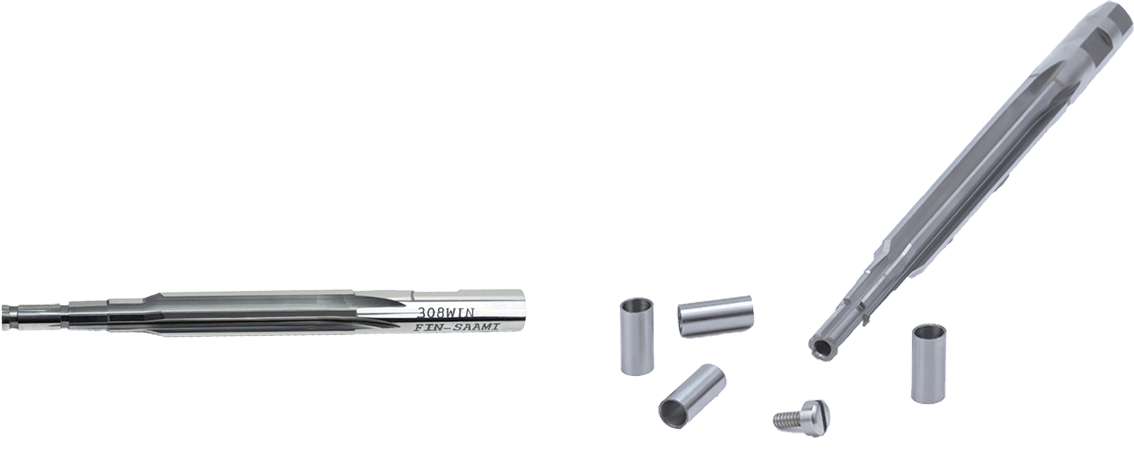
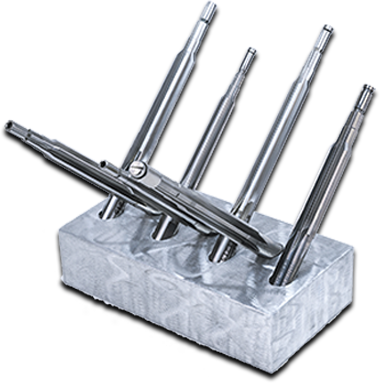
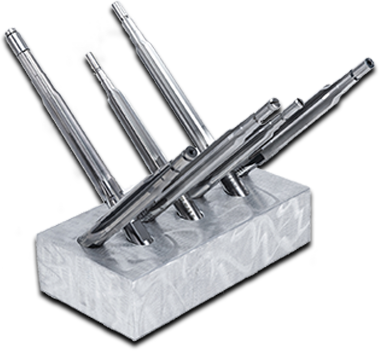
Most specials can be made in spiral-fluted
configurations as well as the traditional straight flute design. All
the options we offer on our standard tools (removable pilots, oil
grooves, etc.) can also be incorporated in your tool. Rimmed and belted
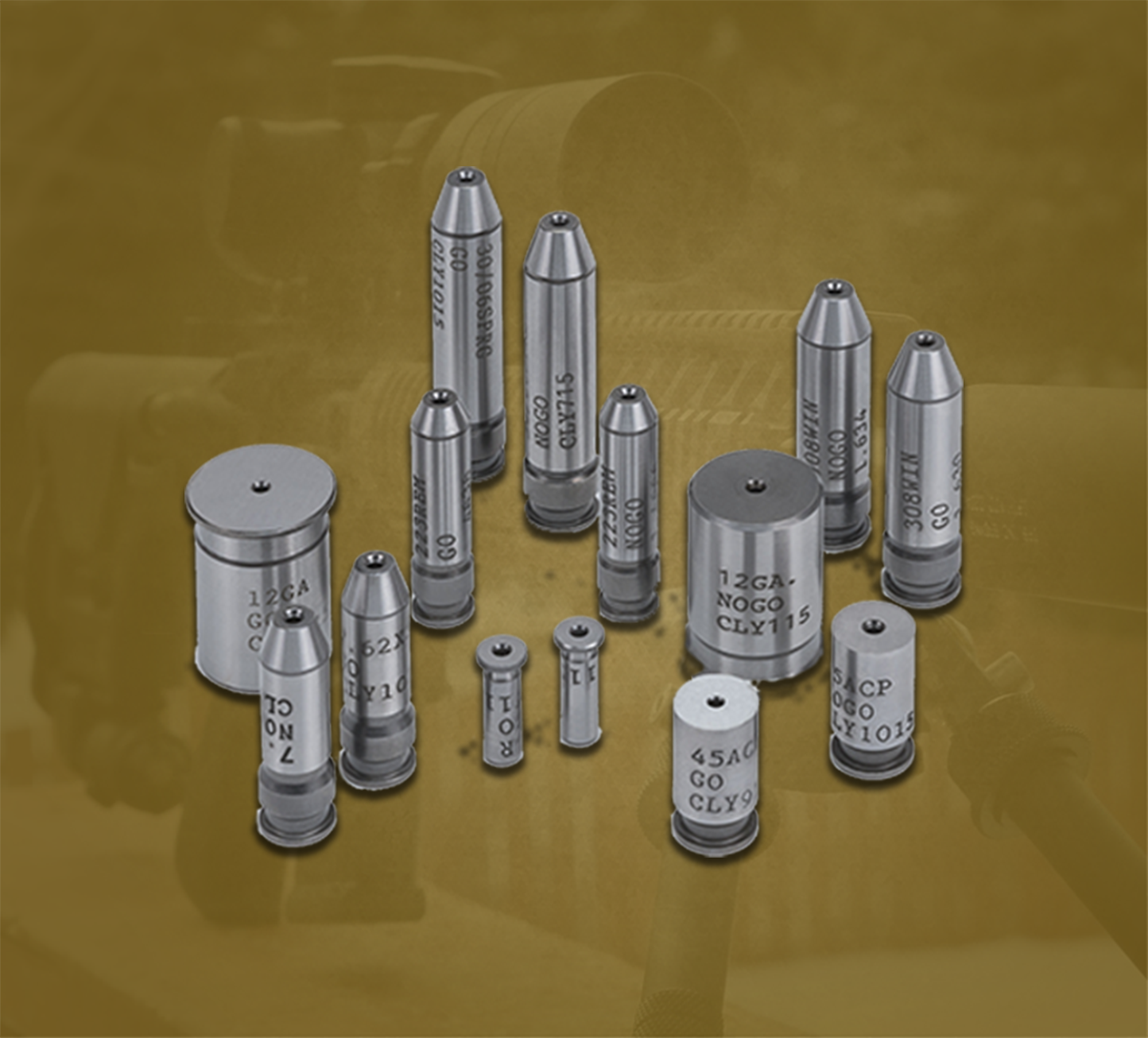
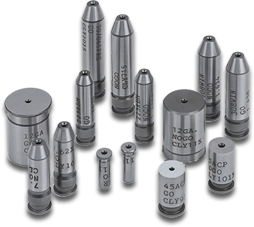
specials usually can use the headspace gauges of the original base
case, while rimless wildcats generally require headspace gauges made to
new dimensions. We are happy to supply these as well.
Should you wish to have sizing dies made for your
wildcat, we can also provide a roughing chamber reamer which, when set
to the diemaker of your choice, can be used to make full-length resize
dies. The finish chamber reamer can usually be used to make a seating
die.
We are limited only by your imagination. Let us know what you'd like to accomplish and we will work with you to achieve it.
Important
We strongly recommend that you check all dimensions of
any tool to assure yourself that it is the tool you ordered. Please do
this before you use the tool. On all special tools, we make every
effort to provide the tool you want, but you must be the final
inspector. Different wildcats are often called similar names and can be
confused. It is better to check your tool before using than to ruin a
barrel.
|